The tax treatment of a rental property bill depends on what you paid for, not what the invoice calls it. A plumber’s charge to fix a leaking tap may be deductible in full this year. A bill to install a new bathroom generally isn’t, even if the renovation began because something was broken.
For landlords, the useful first step is to sort expenses into three groups: costs you may claim in the year you incur them, capital costs claimed over several years, and costs that aren’t rental deductions. Then check when the expense arose, whether the property was being used to earn rent, and what records show the work actually done.
Check the rental period before sorting the bills
Most ongoing expenses are deductible only to the extent they relate to a property that is rented or genuinely available for rent. A vacant week between tenants can still qualify. Simply intending to rent the property later is not, by itself, proof that it was available: advertising, a realistic asking rent and a property tenants could reasonably occupy all matter. The Australian Taxation Office (ATO) identifies restricted advertising, unreasonable rental conditions and repeated refusals of suitable tenants as signs a property may not be genuinely available for rent.
If you use a holiday rental yourself, rent out only part of a home, or switch a property from private use to rental use, divide shared expenses on a reasonable basis. Keep the dates and calculation. Some holding costs incurred while preparing a property for its intended rental use may still be deductible before it is ready for tenants, but that does not turn renovation costs into repairs.
Where a property is co-owned as an investment rather than run as a rental business, each owner generally reports rental income and expenses according to their legal ownership interest. Paying more of the mortgage or other bills does not, on its own, let one joint owner claim a larger share.
Expenses landlords can generally claim in the year incurred
The ATO’s list of common immediately deductible expenses includes tenant advertising, agent fees, council rates, land tax, eligible water charges, insurance, cleaning, gardening, pest control, loan interest and qualifying repairs. You must have incurred the expense yourself; a water usage charge paid by the tenant is not your deduction. Certain legal costs connected with earning rent, such as action to recover unpaid rent, can also qualify.
Interest deserves its own check. Interest on money borrowed to buy, repair or renovate an income-producing rental property may be deductible, even where the renovation itself is capital expenditure. Repayments of loan principal are not. If you redraw from the investment loan to buy a car or pay another private expense, the interest attributable to that redraw is not deductible. The test is how the borrowed money was used, not which property secures the loan. Keep loan statements and a record of each redraw so you can calculate any split.
Strata levies also need to be read rather than claimed as one lump sum. Ordinary administration levies and contributions to a general-purpose sinking fund can generally be deducted. An additional contribution earmarked for a major capital project is different: it is not an immediate deduction, although a capital works claim may become available when the work is completed. Ask the body corporate for the levy notice and project details if the purpose is unclear; don’t claim the same insurance or maintenance cost again when it is already included in a levy.
Repairs restore; improvements add or replace
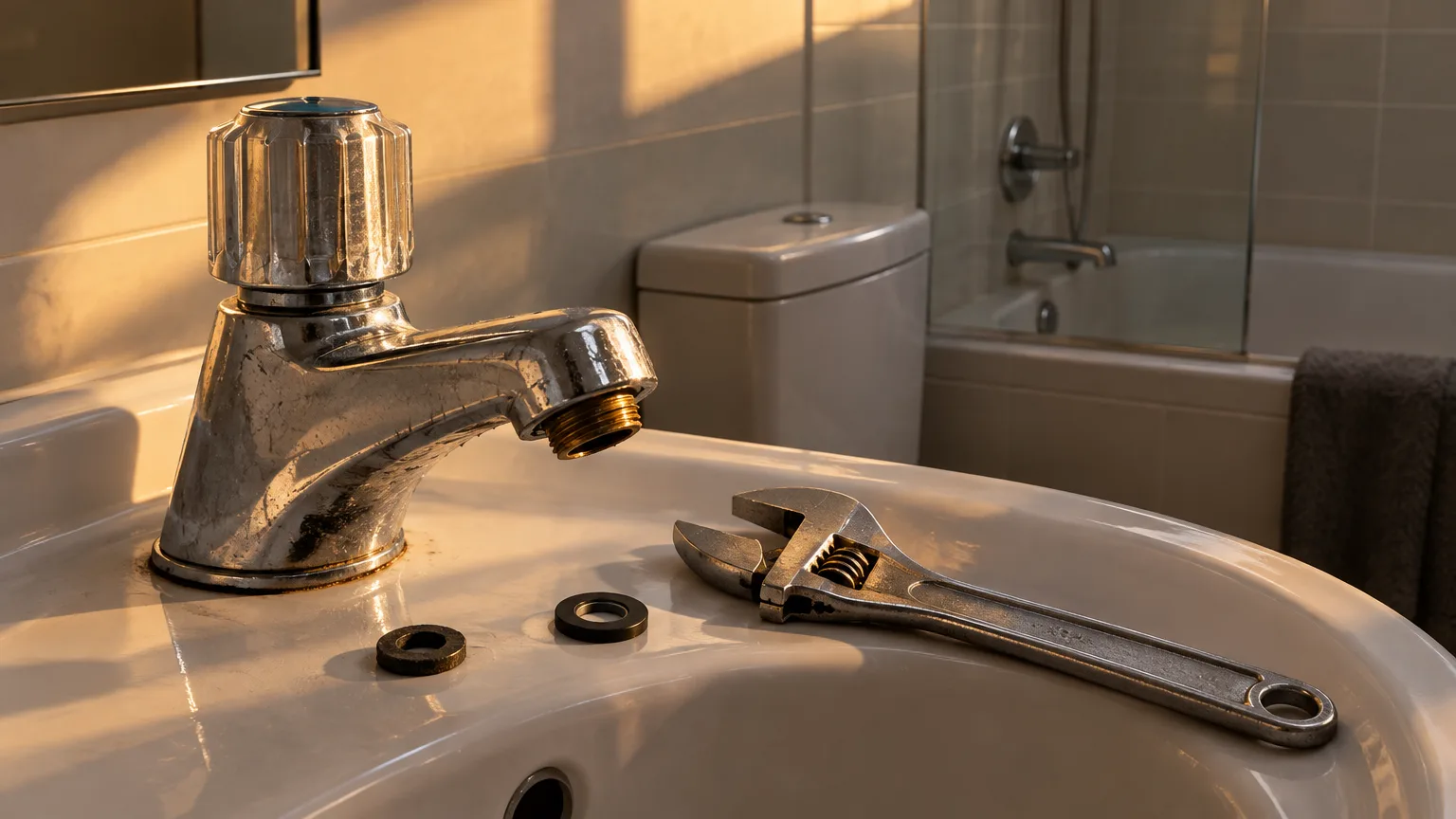
A deductible repair fixes damage or deterioration associated with earning rental income. Replacing a broken windowpane, repairing part of a storm-damaged fence or fixing a leaking tap can meet that description. Maintenance keeps the property in usable condition: servicing existing equipment or repainting faded walls are common examples. The ATO’s repair guidance distinguishes this work from fixing defects that were already present when you acquired the property. Those initial repairs are capital costs, even if you did not know about the damage when you bought it.
A practical test is to ask what existed before the work and what exists now. Replacing damaged boards in an otherwise sound deck points towards a repair. Building a larger deck adds to the property. Replacing a whole structure rather than its damaged part may also be capital work. The cost or urgency of a job does not settle the question: an expensive repair can remain a repair, while a relatively modest new installation can be capital.
Work done between tenancies needs the same analysis. If a tenant damaged the property and you repair it before seeking the next tenant, the vacancy does not automatically change the work into an improvement. Conversely, replacing defects present when you purchased a property does not become an immediate deduction merely because you waited until after the first tenant moved in.
Mixed jobs should be broken down. If a contractor repairs a damaged section of guttering and installs a new covered outdoor area, ask for separate descriptions and costs. A single invoice labelled “property maintenance” does not establish that every item is immediately deductible. Dated entry reports, photographs, tenant correspondence and a detailed invoice can show both when damage arose and precisely what was replaced.
Capital costs may still produce deductions over time
“Not immediately deductible” does not always mean “no tax benefit”. Capital expenditure generally falls into one of these categories:
| Cost | Usual treatment |
|---|---|
| Building extensions, structural improvements and qualifying initial repairs | Capital works deductions, subject to eligibility and timing rules |
| New, separately identifiable items such as appliances, carpets or furniture | Decline-in-value deductions, subject to the asset rules |
| Eligible costs of arranging a rental-property loan | Borrowing expense deductions over time |
| Certain purchase costs, such as transfer duty and conveyancing | Considered in the property’s capital gains tax (CGT) cost base rather than claimed against annual rent |
For eligible capital works, the usual deduction rate is 2.5% of construction expenditure a year for 40 years, starting when the work is completed and used to produce income. A $20,000 qualifying improvement would therefore produce a full-year deduction of $500, not a $20,000 repair claim. The actual claim depends on the work, construction details and period of income-producing use. Keep the builder’s breakdown or obtain a suitably prepared construction-cost estimate where needed.
A new dishwasher is generally a depreciating asset rather than building work. Eligible assets costing $300 or less may qualify for an immediate deduction, but only if the other conditions are met, including rules for sets and substantially identical items. Buying three matching stools separately does not necessarily make each an independent $300 claim. More importantly, restrictions apply to the decline in value of certain second-hand assets in residential rentals, including assets acquired with an established property or previously used privately. Check an asset’s history before claiming it.
Loan establishment fees, lender’s mortgage insurance and other eligible borrowing costs are generally spread over five years or the loan term, whichever is shorter. If total deductible borrowing expenses are $100 or less, they may be deductible in the year incurred. These costs are separate from loan interest.
Keep capital records for the eventual sale, too. Purchase and sale costs and some other capital expenditure may affect the CGT calculation. Capital works deductions you have claimed or can claim generally have to be excluded from the cost base, so keeping a record of annual claims helps prevent double counting. The idea of a cost base will be familiar if you have looked at how capital gains tax on shares is calculated, but property has its own adjustments.
Costs that are not ordinary rental deductions
A property’s purchase price, transfer duty on acquisition and conveyancing costs are not annual rental expenses. Neither are loan principal repayments or the value of your own labour on a renovation. Private-use costs must be excluded from a rental claim.
For most individual owners of residential rental properties, travel to inspect, maintain or collect rent is also not deductible. The ATO’s residential rental travel rules provide exceptions for certain entities and for property used in carrying on a rental business; owning a rental property does not by itself establish that you run one.
Take care with arrangements involving family or friends. Charging below-market rent can restrict deductions, and a property reserved for private use is not made genuinely available for rent simply by placing an advertisement. If expenses exceed rental income under an ordinary commercial arrangement, a rental loss may reduce other assessable income, subject to the applicable rules. That does not justify claiming private or capital costs as annual expenses.
Keep records that explain the claim, not just the payment
An agent’s annual statement is a useful starting point, but it cannot tell you whether a contractor replaced one damaged component or installed an improvement. Build a separate file for each property and retain:
- leases, rent statements, bond records and details of insurance payouts or other rental income;
- advertising and booking records that show when the property was genuinely offered for rent;
- invoices and receipts describing work, alongside condition reports, photos and correspondence where the repair date or cause matters;
- loan agreements, interest statements and redraw records, with your calculations for any private-use portion;
- strata levy notices and details of any special capital project;
- purchase, construction, asset and sale records, plus depreciation schedules and annual capital works claims.
The ATO’s rental-property record rules generally require records to be kept for five years, but the starting point depends on what the records support. Documents relevant to CGT need to remain available throughout ownership and generally for five years after the relevant disposal. Do not discard renovation invoices after the year’s tax return is lodged simply because no immediate deduction was claimed.
At tax time, report the rental activity with your other income and deductions, but keep the categories separate. The rules for work-related deductions claimed by employees do not turn a property expense into an employment expense. If a substantial invoice mixes repairs, new assets and building work, obtain an itemised breakdown before lodging. That one step is often more useful than trying to reconstruct the job years later from a bank transaction.
Disclaimer
This article provides general Australian tax information, not advice for your circumstances. A registered tax agent can help assess unusual ownership, financing or renovation arrangements.