The cheapest-looking crypto exchange can become an expensive choice if you can’t withdraw your coins, an attacker gets into your account, or the platform fails while holding your assets. A low trading fee tells you little about those risks.
For an Australian buyer, the useful question is not simply “Is this exchange secure?” It’s: who holds the assets, what stops an unauthorised withdrawal, what happens when systems fail, and what will a complete buy-and-sell cycle cost? Check those points before sending more than a small test amount.
Check the business behind the trading screen
Start with the legal entity you’ll deal with, not the brand on the app. Find its company name, terms of service and the entity that will hold your Australian dollars and crypto. A familiar brand may offer different services through different entities, so check the terms for the account you’re opening.
Businesses providing virtual asset services in Australia must register with AUSTRAC. Search the public Virtual Asset Service Provider Register using the legal name, and check that the result matches the business named in the terms. Treat registration as a necessary check, not a safety rating: AUSTRAC’s remit here is financial-crime oversight, not a guarantee that an exchange is solvent or will protect customer assets from every loss.
If a platform advertises an Australian financial services (AFS) licence, verify the licensee and the services it is authorised to provide through ASIC’s professional registers. Don’t assume a licence number displayed by an affiliated company covers every product in the app. Licensing requirements depend on the service and product; Australia’s new framework for digital asset platforms and tokenised custody platforms is due to take effect in April 2027.
Finally, reach the exchange through an address you’ve checked independently. ASIC’s warning about fake platforms and exchange impersonation is a reminder that even a convincing login page or app can belong to someone else. A register check is of little use if you then deposit into an impostor’s account.
Find out what “holding your crypto” means
On a custodial exchange, you see a balance in your account, but the platform or its custody provider controls the private keys needed to move the crypto. That makes trading convenient. It also means your ability to recover or transfer assets depends on the custody arrangements, the platform’s operations and, if it fails, the relevant legal terms.
Read the custody and insolvency sections of the terms. Ask:
- Which legal entity holds customer crypto, and does it use another custodian?
- Are customer assets kept separate from the exchange’s own assets in its records? How often are balances reconciled?
- Can the exchange lend, pledge or otherwise use assets you leave in the standard trading account? Is a yield product governed by different terms?
- What do the terms say about customers’ rights if the exchange or custodian becomes insolvent?
- Can you withdraw the specific asset to a wallet you control, or can you only sell it and withdraw cash?
These questions matter more than a headline claim that “most assets are in cold storage”. Offline storage may reduce one type of hacking exposure, but it does not answer whether customer holdings are properly accounted for or what happens in an insolvency. A published proof-of-reserves exercise is worth reading, but check its date, scope, treatment of liabilities and whether an independent party examined it. Don’t mistake a snapshot of selected wallet balances for a complete audit of the business.
Be precise about insurance, too. Ask what the policy covers, who is insured, its limits and exclusions, and whether an individual customer has any claim. “Insured” by itself is not an answer to what happens if your account is taken over or the platform fails.
Money held at an exchange is not the same as a deposit you hold directly with a bank. Australia’s Financial Claims Scheme protects eligible deposits at authorised deposit-taking institutions; it is not a blanket guarantee for crypto balances or exchange accounts. If an exchange mentions an Australian banking partner, check exactly whose deposit is held and under what arrangement.
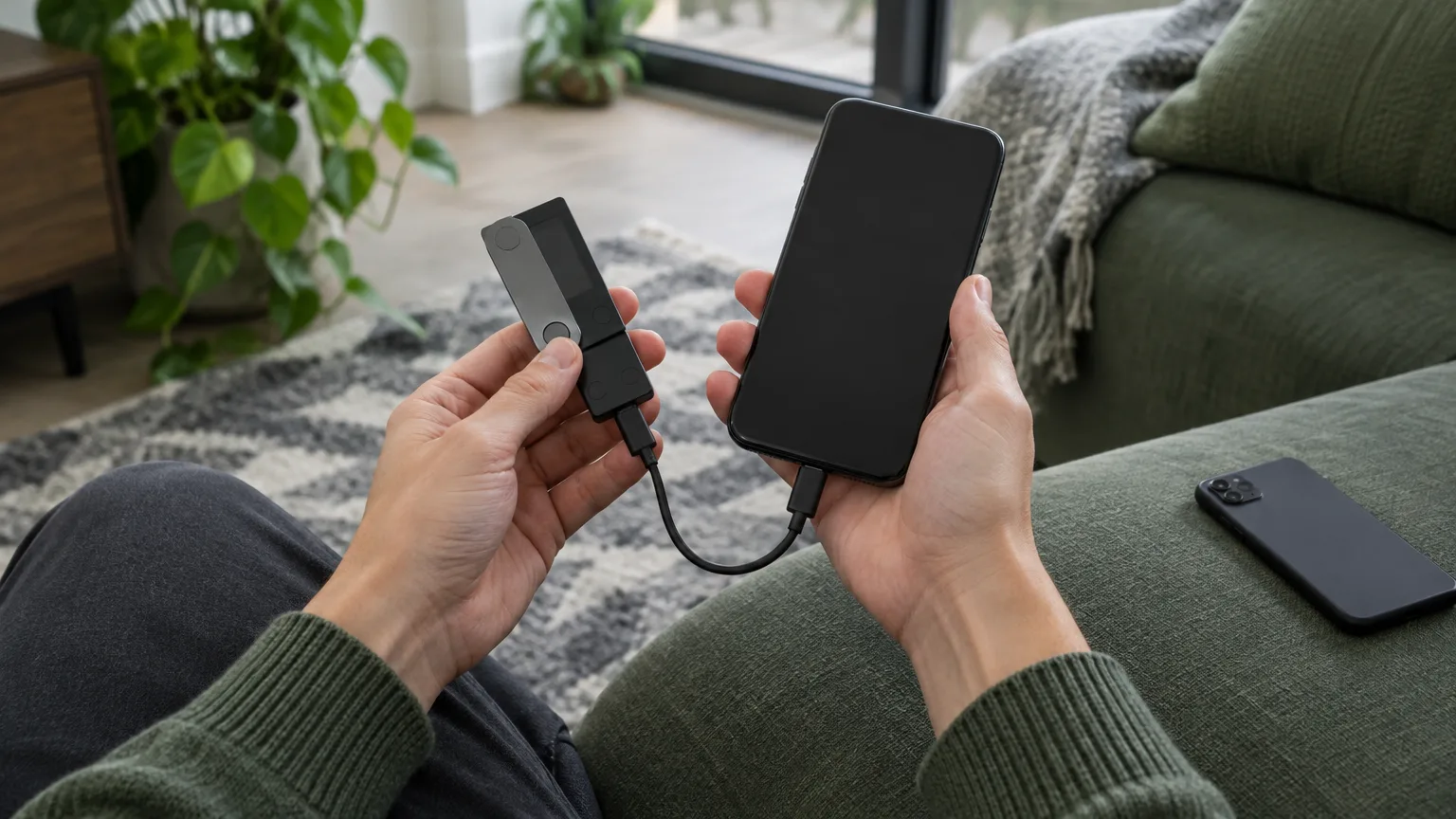
If you plan to buy and hold rather than trade often, moving assets to a wallet you control can reduce your exposure to exchange custody. It replaces that risk with responsibility for your own keys and recovery information. See our guide to exchange, software and hardware wallets before you make that choice.
Test account security before funding it
An exchange can have strong custody controls and still lose assets when a customer account is compromised. Look at the settings available to you, not just a security badge on the homepage.
Prefer an exchange that supports a passkey or a physical security key for sign-in. If those aren’t available, use an authenticator app rather than relying only on SMS or email codes. The Australian Cyber Security Centre’s multi-factor authentication guidance explains the differences and recommends protecting your email account as well: someone who controls your inbox may be able to reset other accounts. Use a unique password, store recovery codes securely and review the exchange’s account-recovery process.
Then check what happens after a successful login. Can you see active sessions and sign out unfamiliar devices? Are you alerted when a new device logs in, a password changes or a withdrawal address is added? Can you turn off an API key you no longer use? If you don’t need trading software connected to the exchange, don’t create an API key in the first place.
Recovery deserves close attention. Ask what an attacker would need to persuade support to change your email address or remove your multi-factor authentication. Strong sign-in protection is less useful if those safeguards can be bypassed through a weak recovery process.
Make withdrawal controls a deciding factor
A platform can be easy to deposit into and hard to leave. Before buying, find the withdrawal rules for the asset you intend to hold.
Check whether the exchange supports on-chain withdrawals, which networks it supports, and whether you can send to your own wallet. A coin name alone isn’t enough: sending on the wrong network, or to a wallet that doesn’t support it, can result in a loss. Also check minimum withdrawals, daily limits, verification requirements and any delay after changing security settings or adding a new address.
Useful protective features include address allowlisting, confirmation for a new withdrawal address and a delay before that address can be used. They may slow down a legitimate transfer, but they can also give you time to react to an unauthorised change. Confirm whether a delay applies automatically or only after you enable it.
Test the exit before committing a larger amount. Make a small purchase, send a small withdrawal to a wallet you control, and record the network, fee and time taken. If you expect to cash out into an Australian bank account, test a small AUD withdrawal as well. One successful test cannot prove the platform will always process withdrawals, but it can reveal restrictions, unexpected fees or confusing steps while little is at stake.
Unexplained pressure to deposit more money to “unlock” a withdrawal is a serious warning sign, particularly if the platform came through an unsolicited message. See also crypto scam warning signs in Australia.
Compare the cost of entering and leaving
A trading-fee percentage is only part of the price. Compare the quoted buy and sell prices with a live reference price, then check the fee schedule for your payment method, the trade, crypto withdrawal and AUD withdrawal. An easy-buy screen may build its margin into the quoted price rather than show it as a separate fee.
For example, on a $1,000 purchase, a 1% difference between the quoted price and your reference price costs about $10 before a separately charged 0.1% trading fee adds another $1. That is $11 before any withdrawal charge. The reference price is not necessarily a price you could execute elsewhere, so use the calculation to compare realistic quotes for the same amount at roughly the same time—not to claim an exact hidden fee.
Consider the order size you’ll actually use. A fixed network withdrawal charge can matter greatly on a small purchase; the buy–sell spread can matter more on a large one. If you plan to trade less-liquid assets, check how much the quoted price changes as you increase the order size. A cheap advertised rate offers little comfort if the market cannot fill your order near that price.
Look for evidence the platform can cope with trouble
Security includes keeping records accurate and services usable under stress. Look for a dated status page, clear incident notices and a way to contact support without relying on social media messages. Search for past outages and read how the exchange explained them: did it distinguish a trading halt from a withdrawal halt, provide updates, and say when service was restored?
Check whether the platform explains how it handles a compromised account, a mistaken transfer or a delayed withdrawal. No exchange can promise uninterrupted access or reverse every on-chain transaction. Clear procedures and timely communication are more useful than a vague uptime claim. ASIC has identified operational resilience, asset holding, record keeping and withdrawal rights as matters for its planned digital asset platform standards. Those plans underline why they are sensible due-diligence questions; they should not be read as proof that a particular exchange already meets them.
Finally, make sure you can export complete transaction, fee, deposit and withdrawal histories. Save copies outside the platform while your account is accessible. The ATO expects records of crypto transactions, including their Australian-dollar values. See also crypto tax records for the ATO.
Choose the exchange that gives you clear answers about custody, lets you secure and test withdrawals, and shows you the full cost of a round trip. If a platform cannot explain where assets are held or how you can get them out, a cheaper trade is not a good reason to overlook it.
Disclaimer
This article provides general information, not personal financial advice. Crypto assets are high-risk; consider your circumstances and seek licensed advice if you need help deciding whether to invest.